Why Global Retailers Choose Long-Term Natural Crystal Wholesale Partnerships
NATURAL · WHOLESALE JOURNAL
For jewelry retailers, importers and boutique brands, finding a natural crystal wholesale supplier is relatively easy. Finding a supplier that can support consistent products, clear communication and repeat orders over the long term is a different challenge.
Natural gemstone jewelry is particularly dependent on supplier consistency because no two stones are perfectly identical. Color, transparency, inclusions and mineral patterns can vary between individual beads and production batches. A reliable wholesale partnership therefore requires more than competitive pricing—it requires shared quality standards and a clear understanding of natural materials.
Natural Crystal Jewelry Has an Enduring Design Language
Fashion accessories can change quickly as colors, shapes and seasonal aesthetics move in and out of popularity. Natural gemstones, however, can be interpreted through many different jewelry styles without losing their underlying material identity.
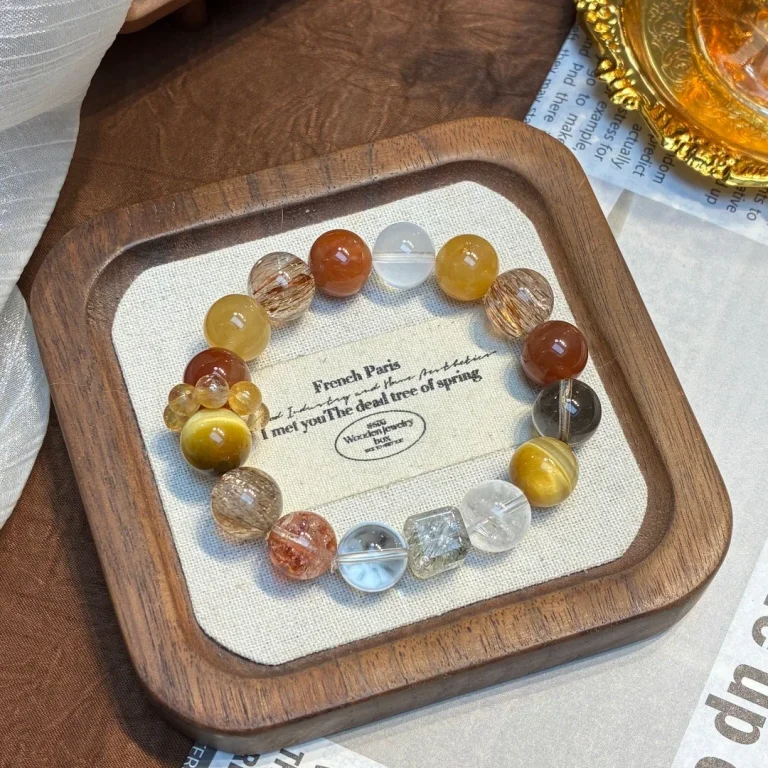
Clear quartz can become a minimalist bracelet. Rose quartz and amethyst can create a soft romantic collection. Obsidian can support darker or unisex designs, while phantom quartz and natural wood can create an earthy aesthetic.
This flexibility allows retailers to refresh their collections through design, color combinations, bead sizes and accessories while continuing to work within the broader natural gemstone category.
Why Long-Term Supplier Relationships Matter
For a retailer, changing suppliers repeatedly can create challenges beyond purchasing price. Different suppliers may use different material descriptions, grading standards, bead tolerances, packaging methods and approaches to natural variation.
A long-term relationship gives buyer and supplier more time to establish shared expectations around:
- Natural gemstone quality
- Acceptable color ranges
- Transparency and inclusion levels
- Bead dimensions and tolerances
- Polishing and drilling standards
- Bracelet sizing
- Accessories and components
- Packaging requirements
- Quality-control procedures
Once these standards are clearly defined, repeat orders can be evaluated against an established reference rather than beginning from zero every time.
1. Honest Natural Gemstone Descriptions
Material transparency is one of the foundations of a reliable crystal wholesale relationship.
Buyers should understand what gemstone they are purchasing, whether known treatments or enhancements are involved, and what natural variations should be expected.
A professional description should avoid hiding normal natural characteristics. If a gemstone commonly displays inclusions, cloudiness, color zoning or mineral formations, communicating these features clearly helps retailers create more accurate product listings for their own customers.
2. Consistent Material Selection
Consistency does not mean making every natural stone look identical. Instead, it means maintaining an agreed overall quality range from one production batch to another.
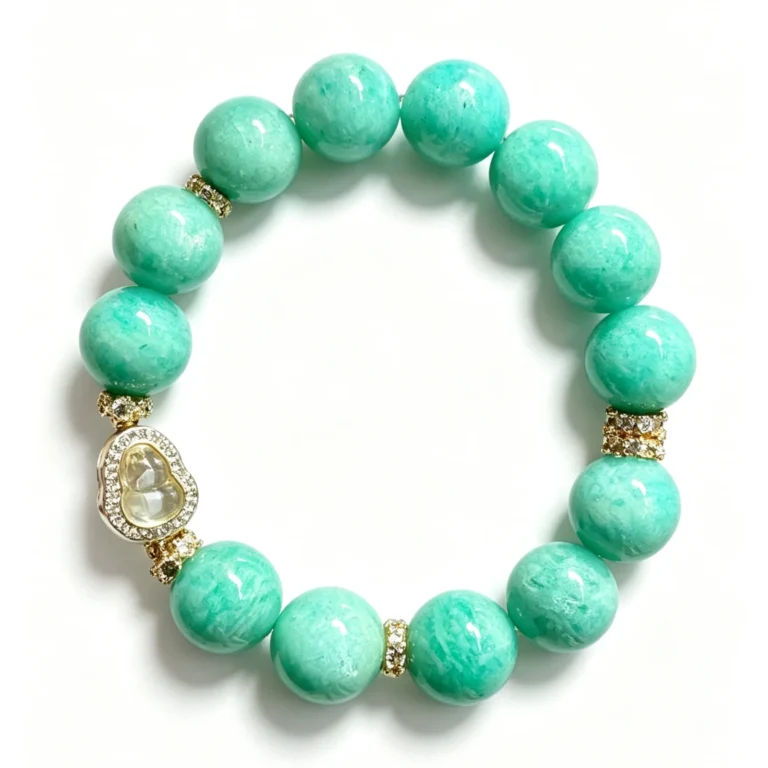
For example, a buyer ordering an aquamarine bracelet may establish expectations for general color range, transparency, bead diameter and overall visual balance. Individual beads can still vary naturally while the finished collection maintains a recognizable appearance.
This distinction between natural variation and quality inconsistency is particularly important in long-term gemstone sourcing.
3. Reliable Quality Control
Quality control becomes increasingly important when moving from samples to repeated wholesale production.
Depending on the product, inspection may consider:
- Gemstone selection
- Bead diameter
- Color coordination
- Surface polishing
- Drilling position
- Structural condition
- Stringing and assembly
- Charm and spacer placement
- Finished bracelet dimensions
- Packaging condition
For natural gemstone products, good quality control should preserve the individual character of the material while identifying workmanship issues that fall outside the agreed standard.
4. Clear Quality Standards
Terms such as A, AA, AAA and premium are widely used in gemstone trading, but buyers should not assume that these labels represent identical standards across every supplier and material.
A more useful approach is to define the actual product characteristics expected for each order.
- Target color range
- Transparency or translucency
- Acceptable inclusion range
- Bead size and tolerance
- Surface finish
- Hole size and drilling position
- Bracelet circumference or wrist size
- Accessory specifications
Clear specifications reduce ambiguity and make it easier for both sides to evaluate future production consistently.
5. Reliable Communication
Communication can be just as important as the physical product in international wholesale cooperation.
Retailers may need to confirm material availability, samples, specifications, customization requirements, packaging, production progress and shipment details across different time zones.
A reliable supplier should communicate clearly when requirements need clarification, when natural material variation may affect an order, or when a requested specification cannot realistically be achieved.
Transparent communication before production is often more valuable than attempting to solve preventable misunderstandings after shipment.
6. Flexible Sampling & Product Development
Long-term wholesale relationships often evolve beyond repeatedly purchasing the same products. Retailers may want to test new gemstones, change bead sizes, introduce new color combinations or develop exclusive designs.
Sampling allows buyers to evaluate these ideas before committing to larger production quantities.
For OEM and ODM projects, a structured sampling process can help confirm:
- Gemstone combination
- Bead size
- Bracelet proportions
- Focal bead design
- Charms and accessories
- Metal finish
- Branding
- Packaging
This flexibility can help retailers gradually develop more distinctive collections with a supplier that already understands their quality expectations.
7. Private Label & Custom Packaging Support
As a jewelry business develops, purchasing requirements may extend beyond the gemstone product itself.
Private-label support can include branded jewelry cards, gemstone information cards, gift boxes, pouches, care instructions, labels and other presentation elements.
When product development and packaging are coordinated through a stable supply relationship, retailers can create a more consistent visual identity across different collections.
8. Flexible MOQ for Different Development Stages
Not every retailer begins with the same order volume. An emerging boutique testing a new collection has different purchasing needs from an established importer replenishing a proven product line.
MOQ requirements can vary according to gemstone availability, design complexity, custom components and packaging. For buyers, understanding these variables is more useful than looking for one universal minimum quantity.
A practical wholesale relationship should establish quantities that make sense for the actual project while recognizing the production requirements involved.
9. After-Sales Support Matters
Even with careful quality control, international wholesale orders can occasionally involve questions about quantities, specifications, transportation or individual products.
A reliable supplier relationship therefore needs a clear process for reviewing issues after delivery.
Professional after-sales communication should focus on documenting the issue, identifying its cause and discussing an appropriate resolution according to the agreed order terms.
For long-term cooperation, the way a problem is handled can be as important as how smoothly an ordinary order is completed.
10. Supply Stability Supports Repeat Collections
Retailers developing a recognizable gemstone collection may need to reorder successful designs over time. This makes supply continuity an important consideration when selecting a wholesale partner.
Natural materials can vary in availability and appearance, so exact replication may not always be possible. A responsible supplier should communicate these limitations and, when necessary, discuss suitable alternatives rather than silently substituting materials.
For buyers, this transparency makes it easier to plan repeat collections while preserving consistent product descriptions.
What Global Buyers Should Ask a Crystal Wholesale Supplier
Before developing a long-term relationship, importers and retailers can ask several practical questions:
- Are the gemstone materials clearly identified?
- Are known treatments or enhancements disclosed where applicable?
- How is product quality defined?
- What natural variation should be expected?
- Can samples be ordered before bulk production?
- What quality-control process is used?
- What are the MOQ requirements?
- Are OEM, ODM or private-label services available?
- What packaging customization is possible?
- How are quality issues handled after delivery?
- How are material changes communicated for repeat orders?
The answers help buyers evaluate not only the current product, but also whether the supplier’s processes are suitable for future cooperation.
Price Matters, but Total Value Matters More
Unit price is an important part of wholesale purchasing, but the lowest quotation does not automatically represent the lowest total business cost.
Buyers may also need to consider product consistency, communication time, sampling efficiency, packaging, quality issues and the ability to reproduce successful products.
A supplier that understands a retailer’s specifications and maintains agreed standards can create value that extends beyond the price of an individual bracelet.
From Supplier to Long-Term Product Development Partner
The strongest wholesale relationships can gradually move beyond simple buying and selling.
Once a supplier understands a brand’s preferred gemstones, color direction, quality level, bracelet proportions, packaging and target customer, future product development can become more efficient.
A retailer may begin with standard natural crystal bracelets, then expand into exclusive gemstone combinations, custom charms, private-label packaging and complete OEM/ODM collections.
In this way, long-term cooperation can support not only replenishment, but also the continuing development of a recognizable jewelry collection.
Building Sustainable Value in Natural Crystal Wholesale
Natural crystal jewelry offers retailers a broad design language built around color, texture, craftsmanship and individual variation. But turning those materials into a dependable wholesale business requires more than attractive stones.
Material transparency, consistent quality standards, careful inspection, responsive communication, realistic customization and reliable after-sales support all contribute to a stronger international supply relationship.
For retailers choosing a long-term crystal wholesale supplier, the most important question is therefore not simply, “Who can offer this product?” It is also, “Who can help us maintain and develop this product consistently over time?”
Gemstone and wholesale information in this article is provided for general educational and sourcing reference. Natural gemstones may vary in color, transparency, inclusions and texture, and supplier capabilities may vary by material and project. Crystal meanings and traditional associations are provided for cultural, aesthetic and folk reference only and are not medical claims. Market performance, demand and repeat purchasing are not guaranteed.