2026 Custom Crystal Jewelry Trend: OEM & ODM Wholesale Services
NATURAL · WHOLESALE JOURNAL
For boutique jewelry brands, independent designers and online retailers, sourcing natural crystal jewelry is no longer limited to choosing products from a ready-stock catalog. Customization gives buyers another option: developing gemstone jewelry that reflects their own brand identity, target customer and visual direction.
From private-label packaging and customized bracelet sizing to gemstone combinations and complete OEM/ODM product development, custom crystal jewelry services can help wholesale buyers create more distinctive collections instead of competing with identical products already available across the market.
Why Custom Crystal Jewelry Matters for Modern Brands
When multiple retailers source identical jewelry designs, differentiation becomes increasingly difficult. Product photography, branding and pricing may change, but the underlying product remains the same.
Custom crystal jewelry allows brands to move beyond this model. Even relatively simple changes in gemstone selection, bead proportions, color combinations, charms or packaging can create a collection with a more recognizable identity.
- Exclusive gemstone combinations
- Customized bracelet sizes and proportions
- Selected bead sizes
- Custom charms and decorative components
- Brand logo customization
- Private-label packaging
- Exclusive color directions
- OEM/ODM product development
For independent brands, these details can transform a standard wholesale product into a collection that feels more intentional and connected to the brand.
What Is OEM Crystal Jewelry?
OEM stands for Original Equipment Manufacturer. In a typical crystal jewelry OEM project, the buyer already has a relatively clear product concept, reference design or specification, while the supplier supports production according to the agreed requirements.
For example, a brand may already know that it wants a bracelet combining rose quartz, amethyst and freshwater pearl in a particular proportion. The OEM supplier can then help translate those requirements into a production-ready product.
Depending on the project and supplier capabilities, OEM customization may involve:
- Gemstone selection
- Bead size specification
- Bracelet length or wrist-size adjustment
- Charm and spacer selection
- Metal accessory finishes
- Logo elements
- Packaging
- Product labeling
What Is ODM Crystal Jewelry?
ODM stands for Original Design Manufacturer. ODM cooperation can involve more product-development support from the supplier, making it useful when a buyer has a target aesthetic or customer profile but does not yet have a complete jewelry design.
A boutique brand might provide a concept such as “soft pastel natural crystals for spring,” “minimalist unisex clear quartz jewelry” or “earthy gemstone bracelets with natural wood.” The design can then be developed into specific gemstone combinations, proportions and finished product concepts.
This approach can be particularly useful for retailers that understand their market and brand direction but do not maintain an in-house jewelry development team.
OEM vs ODM: What Is the Difference?
| Service | Buyer Provides | Supplier Supports | Best For |
|---|---|---|---|
| OEM | Design concept, reference or specifications | Material sourcing, sampling and production | Brands with an existing product idea |
| ODM | Brand direction, target style or product requirements | Design development, material matching, sampling and production | Brands seeking additional product-development support |
| Private Label | Brand identity and packaging requirements | Logo, labels and branded presentation | Retailers building their own jewelry brand |
The exact scope of OEM and ODM services can vary between manufacturers, so buyers should confirm design ownership, development responsibilities, tooling requirements, sampling costs and production specifications before beginning a project.
Private Label Crystal Jewelry
Not every custom project requires developing a completely new bracelet from the beginning. Private-label services can offer a more accessible way for retailers to build branded crystal jewelry collections.
A buyer may select an existing or lightly customized gemstone design and then introduce branded presentation elements around the product.
- Logo cards
- Custom jewelry cards
- Branded gift boxes
- Logo stickers
- Care instruction cards
- Product information cards
- Custom pouches
- Retail-ready packaging
For emerging jewelry businesses, private labeling can provide a practical bridge between standard wholesale purchasing and fully customized OEM/ODM development.
Natural Gemstone Selection Comes First
For natural crystal jewelry, customization begins with the gemstone itself. Different materials create completely different visual identities even when the basic bracelet structure remains unchanged.
- Clear Quartz: Clean, transparent and minimalist
- Rose Quartz: Soft pink and romantic
- Amethyst: Lavender to deep purple and elegant
- Aquamarine: Fresh, watery blue and delicate
- Citrine: Warm yellow and golden tones
- Green Phantom Quartz: Natural green mineral formations with distinctive internal character
- Rutilated Quartz: Visually striking needle-like mineral inclusions
- Obsidian: Deep, polished tones suited to minimalist and alternative designs
Buyers should also discuss expected variation in color, transparency and inclusions. Because natural gemstones are not perfectly identical, a clear reference range is important when moving from a sample to larger production quantities.
Bead Size Can Change the Entire Design
Bead size is more than a technical specification. It can significantly influence how a finished bracelet looks and feels.
Smaller beads can create a delicate and understated appearance, while larger beads can emphasize the gemstone itself and produce a stronger statement. Mixed bead sizes can introduce rhythm, hierarchy and focal points within a design.
For custom orders, buyers should clearly confirm bead diameter, acceptable size tolerance and overall bracelet proportions during sampling.
Custom Gemstone Combinations Create Brand Identity
One of the most flexible aspects of OEM/ODM crystal jewelry is gemstone combination. Instead of selling a bracelet made from only one material, brands can create a distinctive palette using several complementary stones.
For example:
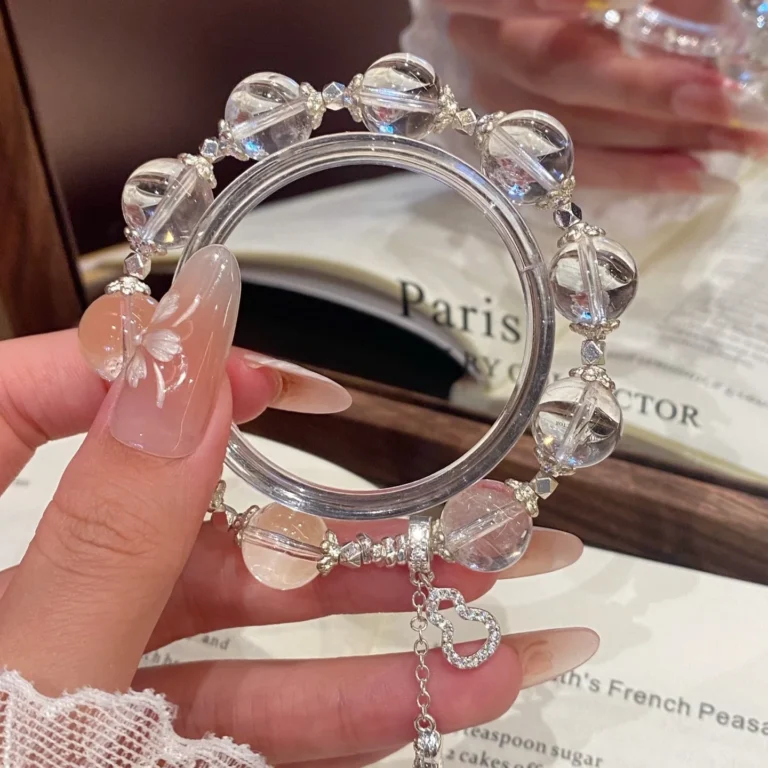
- Romantic: Rose Quartz + Amethyst + Freshwater Pearl
- Fresh Pastel: Aquamarine + Clear Quartz + Peach Moonstone
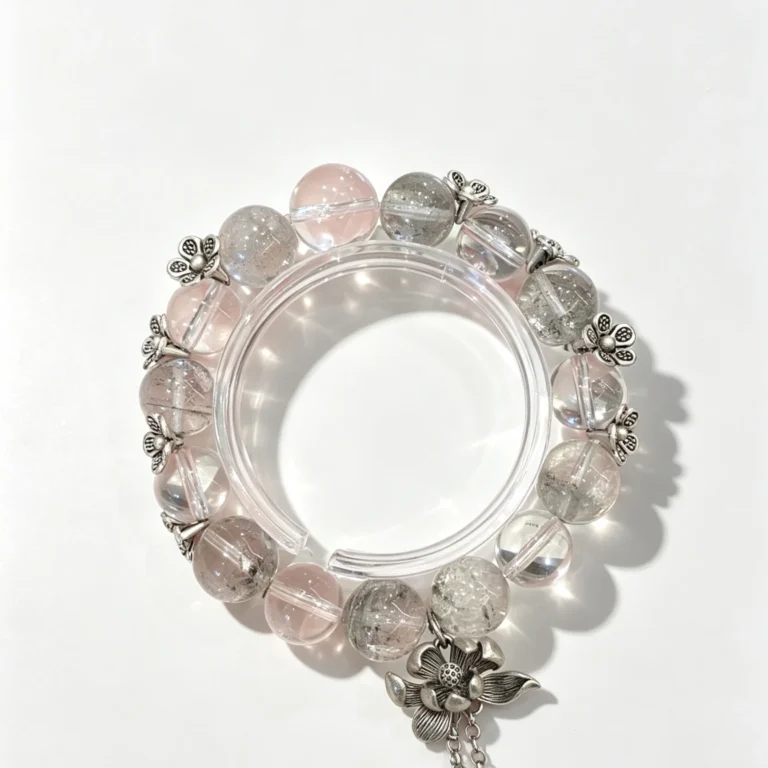
- Earthy: Green Phantom Quartz + Clear Quartz + Natural Wood
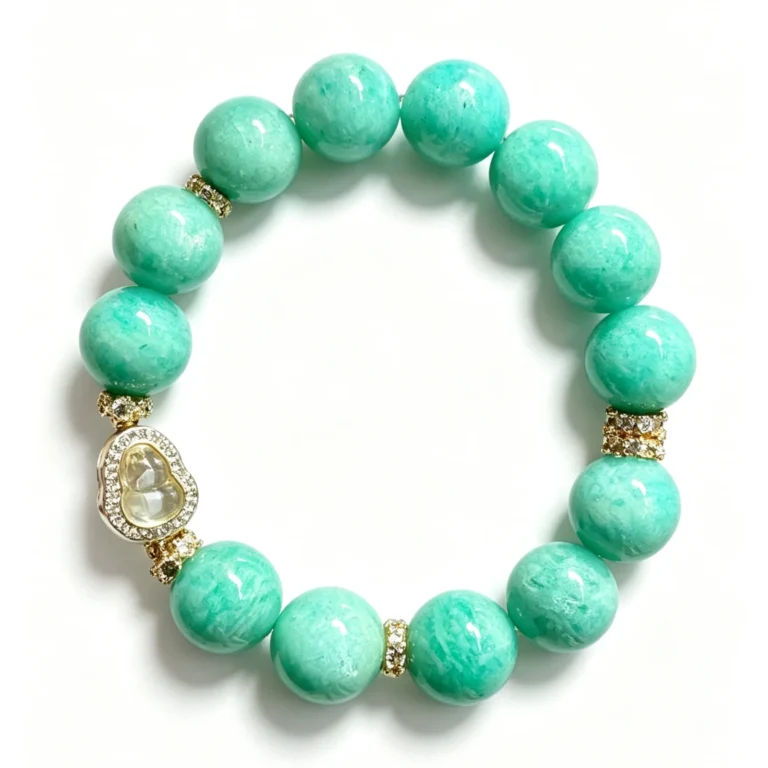
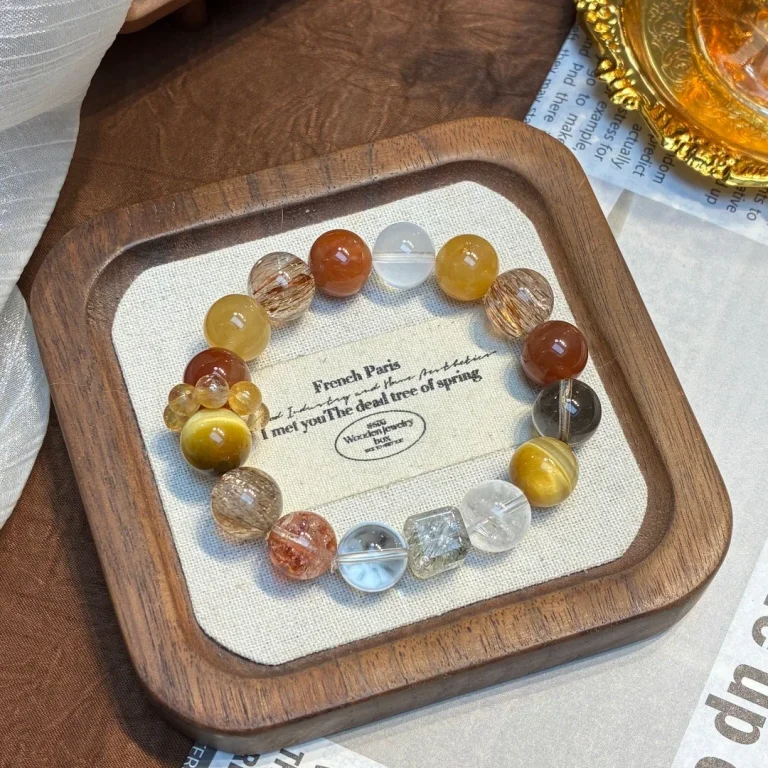
- Warm Luxury: Citrine + Rutilated Quartz + Gold-Tone Accents
- Minimalist: Clear Quartz + Single Amethyst Accent
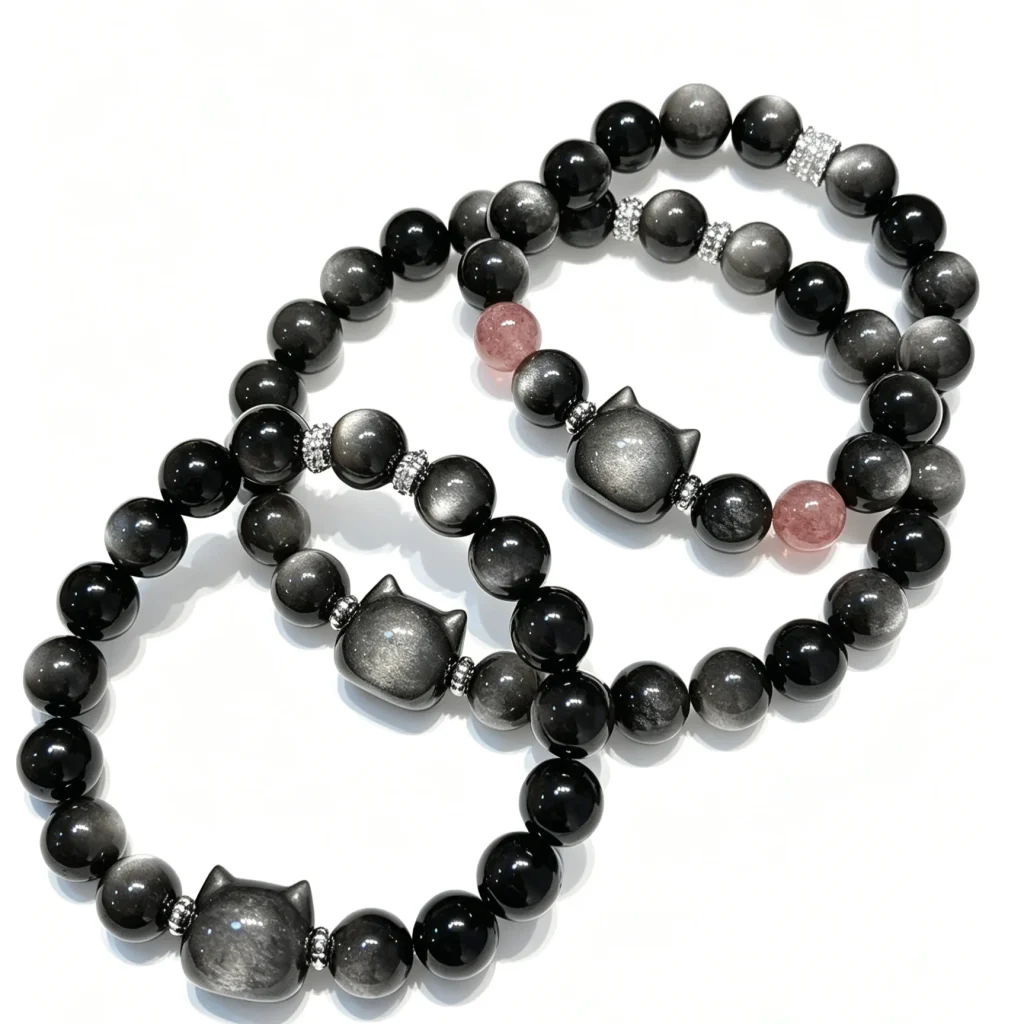
- Alternative: Obsidian + Black Onyx + Silver-Tone Details
A recognizable combination of color, texture and proportion can become part of a brand’s visual signature.
Custom Packaging Completes the Product Experience
For private-label jewelry, the customer experience does not end with the bracelet itself. Packaging can influence how the product is perceived when it arrives, appears on a retail shelf or is presented as a gift.
Depending on order volume and manufacturing options, customization may extend to boxes, pouches, cards, labels and printed product information.
A minimalist natural crystal brand may choose neutral packaging with understated typography, while a romantic collection may use softer colors and gift-oriented presentation. The goal is to make the packaging feel consistent with the jewelry and the wider brand identity.
Understanding MOQ for Custom Crystal Jewelry
MOQ, or minimum order quantity, is one of the first considerations for buyers exploring custom jewelry production.
There is no universal MOQ for OEM or ODM crystal jewelry. Requirements can vary according to the gemstone, design complexity, custom components, packaging, production process and supplier.
A modification to an existing design may require a different quantity from a completely new product using custom metal components and branded packaging.
Buyers should therefore discuss MOQ together with customization scope rather than evaluating minimum quantities in isolation.
Sampling Before Bulk Production
Sampling is an important stage of custom crystal jewelry development. It allows both buyer and supplier to confirm the physical product before moving into larger-scale production.
- Gemstone color and quality
- Bead size and proportions
- Bracelet length and fit
- Stone arrangement
- Charm position
- Metal accessory finish
- Overall workmanship
- Packaging appearance
Because natural gemstones vary from piece to piece, the approved sample should be accompanied by an agreed range for acceptable natural variation rather than being treated as an exact visual duplicate of every future stone.
Quality Control Matters in Custom Production
A beautiful design is only one part of successful OEM/ODM cooperation. Repeatability and workmanship are equally important when a product moves from development into bulk production.
Quality-control considerations for custom crystal bracelets may include:
- Gemstone material consistency
- Color-range control
- Bead diameter tolerance
- Polishing quality
- Surface condition
- Drilling position and quality
- Stringing and assembly
- Charm and spacer placement
- Finished bracelet dimensions
- Packaging inspection
For natural gemstone products, effective quality control should maintain the agreed overall standard without eliminating the natural variations that make individual stones unique.
What to Look for in a Custom Crystal Jewelry Supplier
Choosing an OEM/ODM partner involves more than comparing unit prices. Buyers should consider whether the supplier can consistently translate product requirements into repeatable production.
- Clear natural gemstone material descriptions
- Reliable sourcing and material selection
- Consistent polishing and bead processing
- Flexible customization capabilities
- Reasonable MOQ options for the project
- Sampling and product-development support
- Clear production specifications
- Quality-control procedures
- Private-label and packaging capabilities
- Reliable communication throughout development and production
The most suitable supplier is not necessarily the one offering the largest customization list. What matters is whether the available services match the brand’s actual product strategy, order volume and quality requirements.
A Typical Custom Crystal Jewelry Process
- Share Your Concept: Provide reference images, target style, gemstone preferences, dimensions and branding requirements.
- Select Materials: Confirm gemstone varieties, bead sizes, colors, accessories and other components.
- Confirm Specifications: Define bracelet size, arrangement, workmanship and acceptable natural variation.
- Develop the Sample: Produce a physical sample for evaluation.
- Review & Revise: Adjust materials, proportions or details when necessary.
- Approve Packaging: Confirm private-label boxes, cards, labels or other branded elements.
- Confirm Bulk Production: Finalize quantity, specifications and production requirements.
- Quality Inspection: Inspect the finished products according to the approved standards.
- Packaging & Shipment: Prepare the completed order for delivery.
Customization Helps Build More Distinctive Collections
Custom crystal jewelry gives brands the opportunity to compete through product identity rather than price alone.
An exclusive gemstone combination, carefully selected focal bead, recognizable color palette or distinctive packaging system can make a collection easier for customers to associate with a particular brand.
For boutique retailers, independent designers and growing jewelry businesses, OEM, ODM and private-label services provide different paths toward the same goal: creating products that feel more individual and less interchangeable.
Custom Natural Crystal Jewelry in 2026
As jewelry brands look for ways to create more distinctive assortments, customization remains an important option within natural crystal wholesale. The opportunity extends beyond placing a logo on an existing product—it can include gemstone selection, design development, sizing, accessories, packaging and the complete presentation of a collection.
For buyers, successful customization depends on clear specifications, appropriate sampling, realistic MOQ expectations and reliable quality control. For suppliers, it requires the ability to understand a brand concept and translate it into consistent physical products.
When these elements work together, natural gemstone jewelry can become more than a wholesale commodity. It can become a recognizable part of a brand’s own design language.
Gemstone information in this article is provided for general educational, sourcing and aesthetic reference. Natural gemstones may vary in color, transparency, inclusions and texture. OEM, ODM, MOQ and customization capabilities vary by supplier and project and should be confirmed before ordering. Crystal meanings and traditional associations are provided for cultural and folk reference only and are not medical claims.